Catching Snibbins:
Expanded Parent & Caregiver Guide
This companion guide is designed to help you support your child in understanding and managing negative thoughts, using the story of *How to Catch a Snibbinas a playful, engaging framework. Each section includes the psychological principles at work, discussion tips, and practical activities. We’ve also provided some special downloads at the bottom of this page with more “Snibbin” activities for your child.

The Mind-Body Connection: Why Early Emotional Awareness Matters
A Caregiver’s Guide to Supporting Children’s Emotional Resilience
As caregivers, we nurture our children’s bodies with nutritious meals, safe environments, and loving routines. But just as vital is the care we offer their minds—their thoughts, feelings, and the quiet stories they tell themselves. Emerging research confirms what many parents have long sensed: the mind and body are deeply intertwined, and early emotional awareness can shape not only a child’s mental health, but their physical well-being too.

How This Story Supports Growth
“How to Catch a Snibbin!” introduces a simple, science-backed method to help children manage deceptive or intrusive thoughts. It teaches that while the brain may send automatic messages—like worry, fear, or urges—the mind can choose how to respond. This distinction is key to emotional empowerment.
Thoughts That Shape the Body
When children experience stress, anxiety, or self-doubt, their bodies respond. Studies in psychoneuroimmunology show that negative emotional states can trigger stress hormones, weaken immune defenses, and even alter brain chemistry. But here’s the hopeful truth: the mind has the power to intervene. With gentle guidance and practice, children can learn to recognize unhelpful thoughts and choose healthier responses—building emotional strength and biological resilience.
Here’s the 3-step strategy your child will learn:
This story provides a simple 3-step strategy to help children manage unwanted, deceptive thoughts or feelings. It teaches them to recognize these thoughts as brain-generated and not reflective of who they truly are. Here’s a breakdown of what is taught:
Step 1
Step 2
Step 3
Catch It!
Check It!
Change It!
Recognize the tricky thought for what it is.
The reader is encouraged to identify and name the deceptive thoughts or feelings, like calling them “worry thoughts” or “urges to check.” This awareness creates a mental distance from them.
Change how you see it.
Understanding these thoughts are just false messages from the brain, not the truth. It’s not “you,” it’s your brain.
Shift your focus to what matters.
Choose to engage in healthy, productive activities instead of responding to deceptive thoughts. This helps retrain the brain.

This approach emphasizes that the mind, not the brain, has the power to make conscious choices.
By repeatedly practicing the steps, children can “rewire” their brains, weakening the influence of these unhelpful thoughts. Research even shows its success in reducing intrusive thoughts for conditions like OCD.
The key ideas behind the method include:
- Mind vs. Brain: The brain generates automatic messages, but the mind can decide how to respond.
- Wise Advocate: An inner voice that helps align actions with personal values and goals.
- Brain Flexibility: With focused effort, the brain can adapt and change, creating healthier thought patterns.
Something To Remember
Your child’s thoughts are powerful—but they are not permanent. With your support, they can learn to catch, check, and change the ones that don’t serve them. In doing so, they’re not just building emotional literacy—they’re cultivating a mind-body harmony that will support them for life.
Section 1
The Whisper
Story Moment: The story begins with tiny floating puffs—almost invisible—that plant negative thoughts. One eventually finds a home on top of Toby’s head.
Psychological Focus:
- Cognitive Behavioral Therapy (CBT) – introduces the concept of automatic thoughts.
- Children learn that not every thought they notice is necessarily true.
Activity • Draw Your Puff
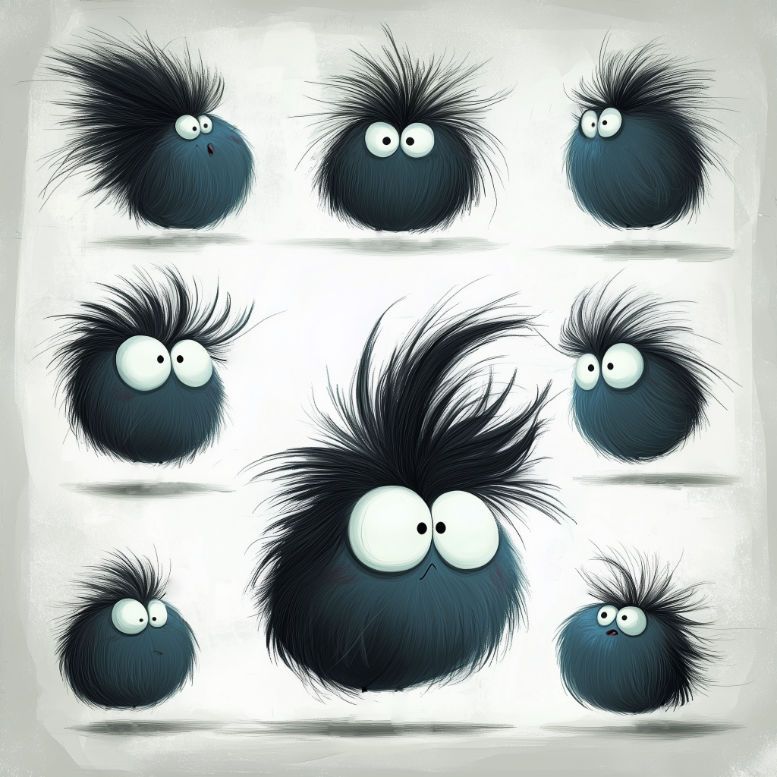
Have your child draw the puff or mini Snibbin. Use it to start conversations about how thoughts can feel real but aren’t always true.

Section 2
Snibbin Appears
Story Moment: The puff grows into Snibbin—a visible, silly creature that repeats negative messages.
Psychological Focus:
- Cognitive Behavioral Therapy (CBT) – Cognitive Distortions: Overgeneralization, catastrophizing, and self-doubt.
- Children learn that believing every thought gives it power.
Activity • Name & Talk
Give the Snibbin a silly name together. Have your child repeat what Snibbin says, then reframe it into a truthful, helpful statement.
Section 3
Meeting Clara & Gurrble
Story Moment: Toby meets Clara, who also has her own negative thought-creature that she’s named Gurrble.
.
Psychological Focus:
- Social Learning Theory: Children see that peers also experience negative thoughts.
- Normalizes that everyone has tricky thoughts, reducing shame or isolation.
Parent Guidance:
- Encourage sharing and discussion of thoughts with friends or siblings.
- Highlight that noticing Snibbin/Gurrble is a normal and healthy skill.
Activity • Story Swap
Have your child tell a “Snibbin story” about a time a thought tricked them. Practice helping each other
“catch it, check it, change it.”


Section 4
Catch. Check. Change.
Story Moment: The rhyme, “Catch it, Check it, Change it — quick!…” guides the child to challenge negative thoughts.
.
Psychological Focus:
- CBT + Mindfulness – Awareness, thought evaluation, cognitive restructuring.
- Encourages active engagement rather than passive belief in negative thoughts.
Parent Guidance:
- Practice the rhyme together daily.
- Role-model the behavior: when you notice a negative thought, share your own “catch, check, change” moment.
Activity • Snibbin Role-Play
Use a toy, sock puppet, or drawing of Snibbin. Let your child “catch” the thought and decide together if it’s true or if it’s only fibbin.
Section 5
Zooming Snibbin-Free
Story Moment: The children gain confidence and enjoy activities free from Snibbin’s interference.
.
Psychological Focus:
- Positive Psychology & Self-Efficacy: Children experience success and control over their emotions.
- Builds resilience and optimism.
Parent Guidance:
- Celebrate small victories: “You caught your Snibbin and tried something new—well done!”
- Ask reflective questions: “How did it feel when you recognized Snibbin wasn’t really you?”
Activity • Bravery Sticker Chart
- Track “Snibbin victories” with stickers, stars, or small rewards.
- Reinforce the sense of mastery.

How You Can Support Your Child
Here are a few gentle, science-backed ways to nurture your child’s emotional resilience.
- Name the feeling: Help your child identify emotions with simple language—“It sounds like you’re feeling frustrated.”
- Validate, don’t fix: Let them know it’s okay to feel what they feel. “That makes sense. I’d feel sad too.”
- Use metaphor and story: Children respond beautifully to symbolic language. Try describing anger as a “storm cloud” or worry as a “buzzing bee”—something they can notice, name, and gently guide.
- Model calm: Your own emotional regulation teaches more than any lecture. When you breathe through stress, they learn to do the same.
- Create rituals of release: Drawing, movement, storytelling, or even a “worry box” can help children externalize and transform difficult thoughts.

Key Studies and Sources

Study: Healthline on Psychoneuroimmunology
Study: Immunize Nevada Overview
Study: Scientific Origin on PNI
Study: Stanford PMHW Datasets
Study: Johns Hopkins Psychiatric Epidemiology
Continue the Fun!
Your journey with your child doesn’t have to end here! Access our Expanded Parent & Caregiver Guide online at no cost. It’s packed with full, section-by-section support, practical scripts, and fun activities to help your child master the “Catch it, Check it, Change it” skill. Just download these PDF docs and continue the adventure together!
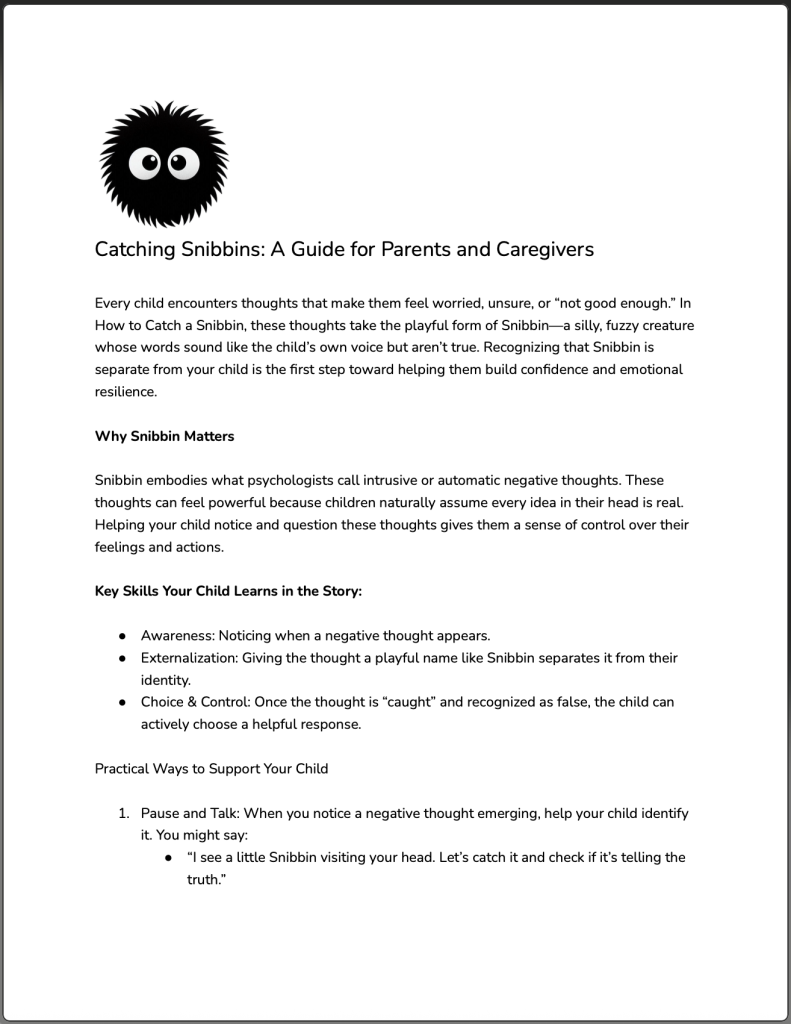
Catching Snibbins: A Guide for Parents and Caregivers
This Parent and Caregiver Guide is a practical companion to the book “How to Catch a Snibbin!” designed to help adults bring the story’s powerful message to life. Using playful language and simple science, this guide walks caregivers through the 3-step Catch It, Check It, Change It method, teaching children how to manage unhelpful thoughts with confidence and curiosity.
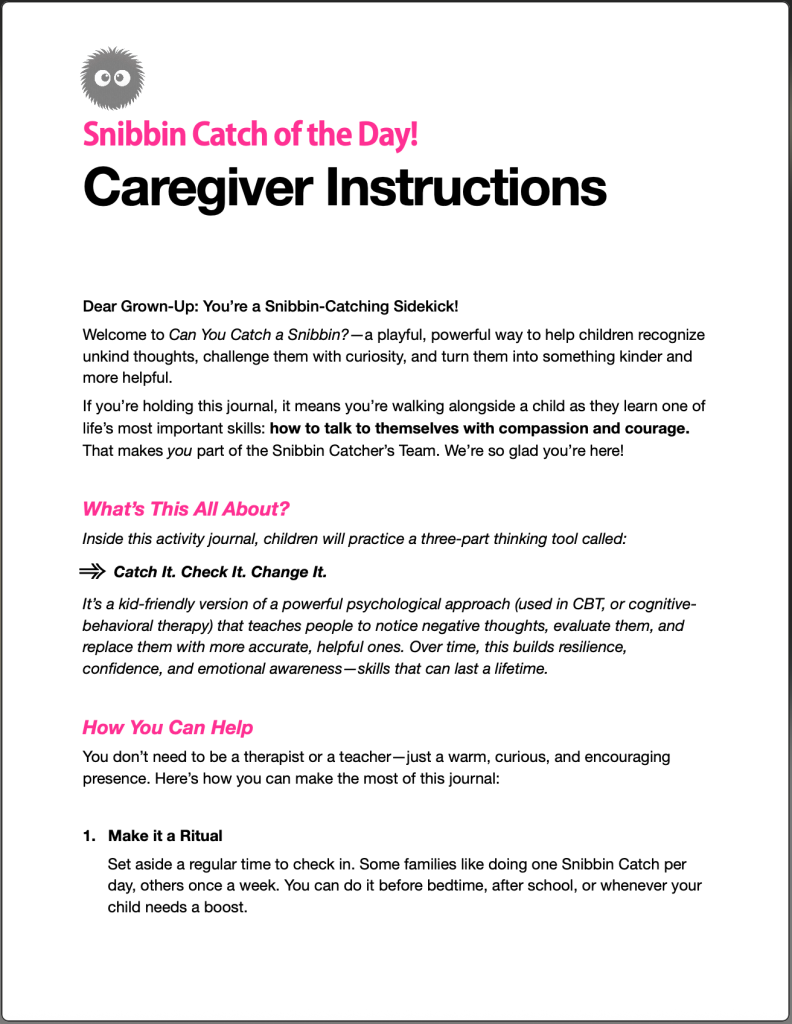
Snibbin Catch of the Day! Caregiver Instructions
This quick-start instruction guide helps parents, caregivers, and teachers make the most of the Snibbin Catch of the Day activity sheets. It includes simple, encouraging scripts for guiding children through the Catch It, Check It, Change It process—plus tips on how to praise effort, use the sticker reward system, and spark meaningful conversations about thoughts and feelings. With short, evidence-based explanations and ready-to-use dialogue prompts, caregivers can confidently support emotional growth and resilience in just a few minutes a day.
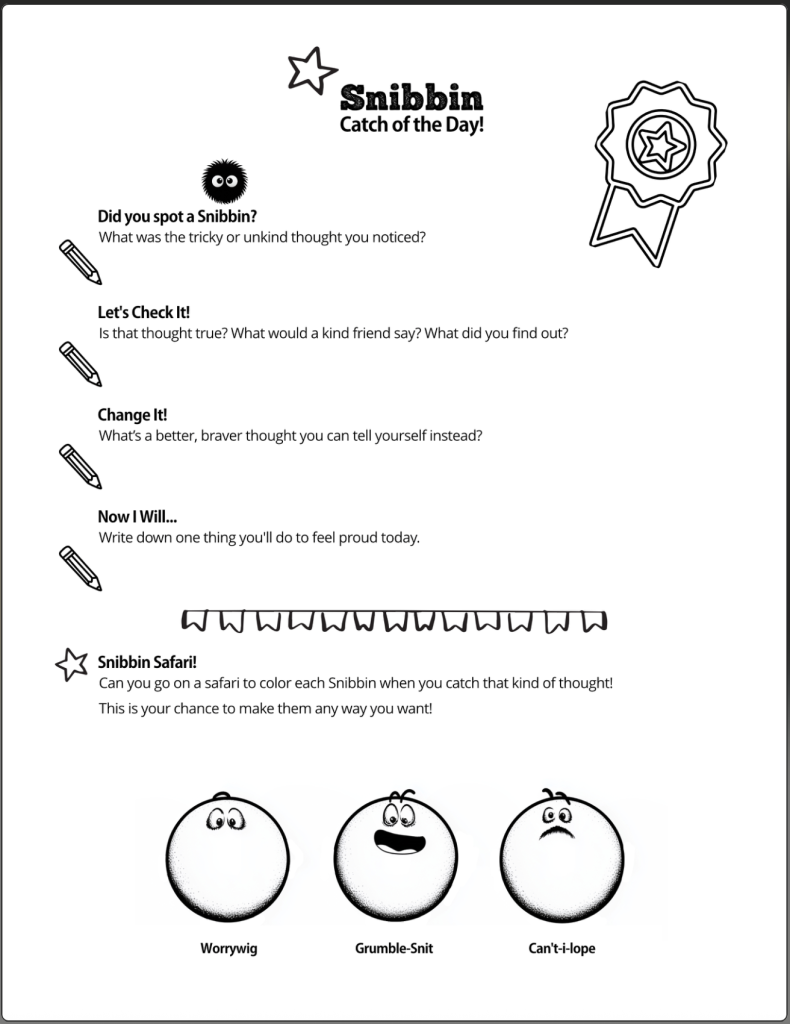
Snibbin Catch of the Day! Activity Sheets
“Snibbin Catch of the Day” is a playful, fun-filled activity book that helps kids catch negative thoughts, check if they’re true, and change them into something kind and brave. Based on cognitive behavioral tools and wrapped in whimsy, it turns emotional growth into a game—complete with Snibbin creatures, silly prompts, and a supportive guide for grown-ups. It’s a magical way to help kids build confidence, one thought at a time.